For instance, I listened to a podcast the other day on Beauty, and how we define and use the word beauty for many different things. Beautiful can be an expression that means, "perfect, good, etc." when used in the context that something was done to our standards. Beautiful can be a way to describe a landscape, a person, a piece of furniture or clothing, and even used to describe an event, like a wedding. All of these things I just listed are extremely different from one another, and yet we use the same word to describe a sort of acceptance or appreciation of them. However, Beauty is also subjective. One person can find something Beautiful and another person, well, could find it much less so.
Like Beauty is subjective, I believe Truth can also be subjective. For an example, lets use politics. It is amazing how I can believe, with all my heart, in one specific narrative, and the person next to me can believe just as much in the exact opposite of what I hold as a truth claim. Why is that?
One theory, is that our differences, you and me, in how we think and orient ourselves with the world, has to do with our brains. One Virginia Tech study found this exact thing with political affiliation. The MRI of a liberal and conservative brain were different. Scientists were able to accurately predict a persons leaning based on their MRI screening. Amazing, right? Liberals and Conservatives actually THOUGHT differently. Explains a lot about how we have issues understanding our opposites, right?
What does all of this have to do with us, here and today? If we are going to form a community of acceptance, we are all going to need to work on defining ourselves and each other in an accepting way. This can be difficult, especially when someone is so vastly different from us. Sometimes, when someone is different, we take it as a direct affront to who we are. We are insulted and get offended. I do not want to see that happen here. I need you all to begin to internalize the idea that just because someone is different, does not mean that we are not all equals, and we can coexist together happily, if we learn to lay aside our preconceived notions and definitions of who or what people or ideas are.
In my faith journey, I have had a lot of issues with people being concerned I think they are dumb for their beliefs. It is a natural way to feel when we are met with someone who thinks differently than we do. We assume they must think we are silly, why do we not define the world as they do? I want to go on the record and say, that I feel everyone has validation to feel and define the world as they wish, and often, as they must. I firmly believe we are all different, we all have different abilities and capacities that make us define things differently. Truth is very subjective, but often we want to say there is only one right way, there can only be one Truth, that is what makes it a Truth.
In this community, Truth is whatever you hold personally to be an accepted personal fact or belief. No one can or should take your truth away from you, and you will need to offer the same courtesy to others. I encourage lively and friendly debate, but there will never be a moment I allow intolerance or belittling of others beliefs. This needs to be a safe place to be ourselves. Let down your guard and embrace each other for who we are, learn to see through another persons eyes and try to understand how they see their world and their Truths.
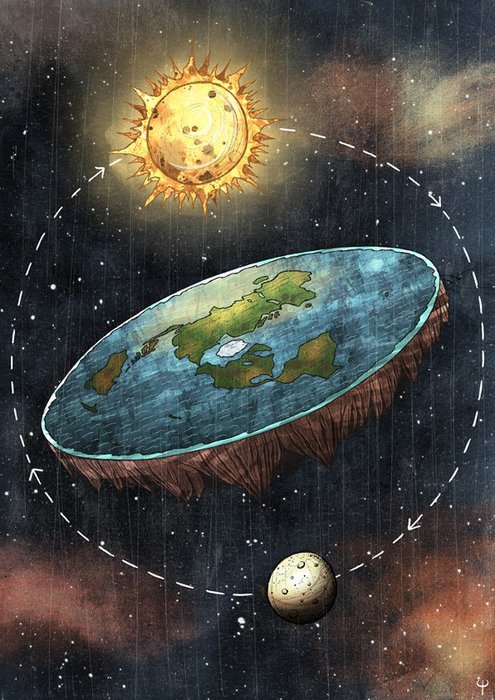
I personally find it hard to quantify or prove truths. People firmly believed in the truth claim that the world was flat, until it was proven it was round. How can we know for certain our truth claims are correct? Advancements in science, health, psychology, etc. are constantly proving that the ways we have viewed the world in the past were somewhat lacking.
So I ask you, How can you know what you believe is Truth? Really? Think about it. This is a question I have mulled over and over in my mind as I have worked on my own personal beliefs. How can I ever know that what I am doing is right, that I have picked a correct path in life? That I am a moral person? I have, obviously, my own personal truth framework that has been carefully formed throughout my life by experiences, education, family, values, etc. But my framework is going to be very different from yours. So I ask again, what is Truth? Perhaps it is far more subjective and personal of a definition than we take it to be.
Because of this, I want everyone to keep in mind, in this community, that others will have different Truths from you. Just because someone is different, does not mean that you have to repel each other or feel inferior to one another. A person who is different simply has a different Truth framework from you. They have had a different life, perhaps a different brain or way of thinking, differences can be good if we find healthy ways to embrace them.
In the future I plan on bringing up some highly controversial topics or intense ways of looking at the world. It is not meant to offend anyone. It is not meant to alienate anyone. It is simply being put out there to be looked at, internalized, and help make you aware of how you define things. It will help us all become better at seeing how others define things, and becoming okay with that. I also hope it helps us see from anothers view in a comfortable way, and learn to accept them for who they are.
That said, I am curious if anyone has a good way they define Truth. Do you believe it to be as subjective as I do?

Interesting! I love the study of truth. I actually believe truth to be eternal, by definition, and that there is only one source of truth. If I had "my truth" and Brian had "his truth" we would both continue on a journey to our own truth and end up light years apart. For truth to be truth, there can only be one. However, I think the idea you have expressed here is one of the most important we can learn on this earth. The way we perceive the world is personal and only Heavenly Father, the source of all truth, can truly know the "truth" in our hearts, because He understands the framework in which we have formed this "truth". I also agree with you that the definition of words is of critical importance in communication and higher learning.
ReplyDeleteThanks for sharing Emily! I am curious, do you believe truths can evolve and change, or is Truth a constant? It seems your definition of truth is very much formed around a spiritual framework, and something I have struggled with in religion is seeing how one Truth is firmly believed, until it changes. Then the old way was seen as misguided and not a truth. So, until the change happened, people believed it to be a truth, and then, all of a sudden, it wasn't. Kind of like the world is flat analogy I gave above. The people living when the world was believed to be flat would never have thought otherwise, but the Truth they were living turned out to be fiction. So, how can we ever know if what we are living is truth? I am curious what you think :)
DeleteLindsay I really appreciate having this chance to search my mind and really find out what I believe. I've never had to define it before and I'm grateful for the challenge. Truth is made up of eternal principles, which are unchanging and constant. While the principles remain the same, the application varies for each individual circumstance. The world was never flat. That wasn't a true, eternal principle, even though it felt true to some. The way, the only way, I can recognize truth is by the companionship of the Holy Ghost. "And by the power of the Holy Ghost ye may know the truth of all things." (Moroni 10:5) I have to be worthy of that companionship. The way I discern truth is to take an idea, try it out in my mind, and let the spirit tell me whether or not it is true.
DeleteLet me know what you think, I am curious to know what your thoughts are after thinking about this idea. I know I am constantly bringing these same questions up over and over again and am surprised how my own answer evolves. I don't know if I believe there is one right answer to this question of Truth or not, but I think your current position is certainly a beautiful one, I have some personal conflict with it. Like, is it myself talking and telling me what I want to hear, or really a universal truth being made witness to me? I think of the billions of Muslims or other christian faiths in the world who apply this same principal to discover truth, and who bear their own testimony of truths they receive. I hope we can continue our chat in person sometime, I need to stop by and visit!
DeleteI wrote out a long response to this and then my phone deleted it, so now that I'm at a computer I'll try again. Also just a side note--this font is really hard to read, can you change it to a more basic one (or just one that has lower and upper case?) I want to follow the discussions, but it's hard to read!
ReplyDeleteOkay, I am with Emily in that I do believe that truth comes from an omniscient God. However, in the process of handing that truth down I believe there are ALWAYS filters. My own, other peoples, even the "professionals" (scientists, prophets, philosophers, etc.) will have their own filters. So I think that although there is one eternal TRUTH, I don't think anyone on earth has it. I read a wonderful analogy in Alonzo Gaskill's The Lost Art of Symbolism. He presents truth as a diamond. You can know what it is. But everyone is going to see and then define and explain it differently. For example, the light may hit it differently from where I stand than from where you stand. Or someone my explain it is a piece of carbon that turns into a diamond over the course of thousands of years. Or someone may explain it poetically as a jewel that reflects light and sparkles and shines. But everyone's experience of that diamond, or their truth, is going to be different. However, they are all truth--just not the whole thing.
He's not the first person to introduce this idea. Even in Plato's cave people were seeing the shadows of truth. I think we are all in the cave. Some people may be closer to the exit (and thus have more pure light to actually see what's out there) but I don't think we leave the cave until death and maybe even until after that. However, that doesn't invalidate anyone else's belief in what they see.
You talked about how important it is to correctly define words (or at least agree on definitions), and I think this is a common stumbling block in talking about truth. "My truth" to me is the fact that those experiences happened and how I have interpreted them is valid. But that doesn't mean that "my truth" is actually God's truth. For example, I may see an argument through a certain lens and be certain that I am right in my stance--that purple is a better color than pink. However, that doesn't mean I am speaking TRUTH (as in something that absolutely no one could argue against or see any other way), I am simply speaking My Truth (the facts as my experience and my viewpoint seem to me). There is a huge difference, but the importance is to remember that we all have filters.
On a more spiritual note even as I've dealt with "faith" questions I have determined that things that I could have sworn were "truth" as witnessed by the Spirit, may have been simply the truth that God needed me to know to get to the next step on my journey. I have faith that ultimately that journey will end up with me knowing actual TRUTH (as God sees it, in the eternities, etc.) but that He is willing to let us believe things that may not be true in order to get us there. This may change, but currently it's where my experiences have led me. What do you think?
Christi,
DeleteThank you for sharing! I especially liked this part: "I am with Emily in that I do believe that truth comes from an omniscient God. However, in the process of handing that truth down I believe there are ALWAYS filters. My own, other peoples, even the "professionals" (scientists, prophets, philosophers, etc.) will have their own filters. So I think that although there is one eternal TRUTH, I don't think anyone on earth has it."
I agree and partially disagree with this thought.
First, I think that perhaps there are some singular universal truths that we may not have found or even be able to comprehend. BUT, I disagree that not anyone has had pure Truth, in the way you have defined it. I think that Christ was perhaps the one person whom we can say had no "filter issues", and his teachings and Truths, would then be sound, do you agree?
However, I don't doubt that the records we have of Christ's life could have that filter, so it does get quite complex.
I also believe, going along with your cave theory, that there are many exits, and not just one way to get out, which I suppose might contradict with there being one Truth. I guess while I believe there are universal Truths, and can say we may not know them, or perhaps not all of them, I still like to think there are many different Truths and not just one, but that's just me. Perhaps all of the micro Truths lead to one eternal Truth, which I would say would be Love if I had to take a guess. A lot of Truths seem to fall under the banner of treating each other with love, kindness and respect. If there was one Truth I think existed in the world it would have to be that.
PS- Is this new font better?
Hi babe, so I wanted to add my two cents worth (for what that's worth :)). Definitely will not be as eloquent or well versed as the comments already given, all of which I've really enjoyed! I'm grateful for the insight it's brought me and that it has allowed my to ponder on my own truths.
ReplyDeleteFirst I want to say that I believe also that all truths have an origin that is our Father in Heaven. I believe that he puts into our minds and hearts truth, whether it be a complete truth or ideas of truth meant for us to cultivate, refine, prove. You shared as an example the world - flat vs. round theory. I'm certain that others besides Columbus believed the world to be round. Did he have concrete evidence? No. But he had enough faith in what he believed and the courage and strength to act upon that believe. Where would we be today in regards to science, medicine, etc. if not for the faith in an idea or belief? Columbus was persecuted, belittled for his believe bur was undeterred from it. Why?
Truths aren't always true because you can physically see it or feel it. I can give the usual examples such as the air we breath. Certainly you can say that our needing oxygen to live and breath is a ttruth, etc..
I (for myself) know certain things to be true. The love I have for my family is a truth. I didn't need to see you or feel you to know that my love for you was true and a bidding, all I needed was for someone to tell me I was carrying my child. Instantaneous love and a truth I did not doubt. Was it complete truth or the idea of truth? The belief and faith that lead to truth? I also know that I have a loving Heavenly Father who has given me guidance and direction through some of the most trying and challenging times in my life, who has spoken truth to me and yes, I can back that up with things that I am physically able to touch and see. These two truths are so real to me that I would risk life and limb to protect them and no, I will never deny them.
You asked if truth evolves? Of course it does. Just as it did foe Columbus or anyone else that is given ideas of truth or a belief and then have the courage and insight to act upon that idea or belief. Just like our children have to learn truth, "yes, 1+1=2, yes, you can get hurt if you run into the street" and a thousand other truths that they have to learn yet we tell them it's absolute truth. We all learn line upon line, here a little there a little, by bits and pieces, until we've experienced enough for that truth to fully develope or evolve in our finite minds. Are we ever going to have full and complete concrete evidence about everything? No. But in the end "truthfully" aren't we all like little children? It's a wise man that says, the more I learn, the less I realize I know.
Thank you for changing the font! This is much better!
ReplyDeleteOkay, this is going to sound radical but to put it frankly I do think Christ had filters as well. I think there are two parts to this. For one thing he had to go through the veil and be taught as a child just like the rest of us. Possibly he had a more pure conduit with the Spirit (kind of like when you are totally living righteously you feel it better than when you are wandering) so that helped, but he still had to learn line upon line. Therefore anything he said would inevitably not be pure TRUTH (the whole diamond) but a part of it. The best evidence of this is in Gethsemane when he begs Heavenly Father to let the cup pass from Him. Someone with a pure understanding doesn't do that. I read that plea as a sign that he too had to act on faith, trusting in God's will even when he didn't understand.
The second thing is that when He taught His doctrines He was still teaching with a filter. Certain doctrines were only for the apostles, or only for the Jews, or only for the Pharisees, etc. They were all for the people of that time period. Although some things He taught definitely apply to us clearly, I think we make a mistake assuming that everything He said is pure Truth. For example, his comment that divorce is a sin is clearly what I would call a filtered comment--it applies to a certain people or time period. We can take truths from it, but not without doing some theological gymnastics (he really meant THIS, or if you translate it this way, etc.) And like you said, there is definitely always the problem of filters, both on the giving end (people translating the Bible, the original authors writing certain things and leaving out others) and the receiving end (what I'm dealing with means certain things might mean something different to me). I guess what I'm trying to say is that even though His comments may have been pure truth, I don't think they are the whole thing and I think you have to see the whole thing to understand it.
Re: the cave and the exits: I do think there are many exits, but I look at Pure Truth as what we see when we get out of the cave. I like the idea of micro-truths. I think we are saying the same thing, just defining it differently. Those "shadows" or micro-truths are ultimately supposed to lead us to the eternal TRUTH (all light and knowledge). I just think that across so many different societies there are so many things in common that there must be an eternal truth that different people, different religions, all pick up on in their own filtered ways. Does that make sense?
I cannot figure out how to edit my comment, so one thing, I meant to say that the idea of a multiple exits type cave theory, or more than one way to get to Heaven theory I suppose, is what gives me hope now. That may have sounded confusing and odd :) Basically, and I think you and I have had a brief discussion on this before, that I don't believe in one true church, or at least one True church.
DeleteI know you're supposed to let the blog post die eventually, but this is such an important conversation to me!
DeleteI think you are in very good company when you say you have never recieved an answer. I have slight OCD tendencies, one of which makes it very hard to feel the Spirit. When I was little I couldn't distinguish between the Spirit and my normal anxiety. I would feel worried about something (a trip for example) and wouldn't know if the Spirit was warning me or if I simply had anxiety. Even now that sometimes worries me ("is this just me, or is this God talking to me?"). So I definitely think that our brains feel the Spirit differently. That is why I am trying to emphasize to my kids that they need to recognize the Spirit early so they can learn to know it.
That being said, I too have had those long hours of prayer with NOTHING to show for it. It's truly hard to understand. But now, years later, I am starting to finally get answers to some of the things I prayed about. They have never come right after a prayer. But I think praying is a sign of faith and humility and I think that that does bring answers--even if it's not on our timeline. This is hard to articulate, but I take comfort in knowing that my having to go through that has made it possible for me to reach out to others who have had to go through that, which is something I wouldn't have been able to do (or even had known to do!) if it hadn't been for those long painful years. So I am starting to see not only some reasons for my suffering, but also am starting to appreciate why it was necessary and what I can learn from it to become a better person.
Re: Jesus having a filter--I do think He filtered what He taught. I think He worked on teaching to the people's level--parables, etc. But that's personal opinion :)
I am slowly coming back around to believing that the ordinances are a necessary part of the return to God. So in that sense I do think the "one true church" thing is important. But I definitely still struggle with the cultural expectations and superiority caused by the "one true church" rhetoric.
Hang in there and don't throw everything away yet. There is light at the end of the tunnel, but you have to keep walking to get there. And sometimes that walk is FILLED with pain and sorrow. :) Thanks for the quick responses and hopefully you are enjoying the conversation as much as I am :)
Okay, need to apologize if that came off sounding "preachy", just a passionate person as you well know!
ReplyDeleteAlso, apologies if my comments sounded like the rantings and ravings of a crazy old person. Which I am as you well know!
Thanks Lindsay for the thoughtful question and to everyone's comments. I've been mentally and yes, spiritually fed today :)
MOM! Never, ever apologize. You are such a smart and intelligent woman with wonderful things to say. I want your input on every post, because you think in such a beautiful way that always uplifts, I know not just me, but everyone who comes here. I love you so much, and am so happy you care enough to come and read the ravings of this crazy young lunatic ;)
DeleteI agree with you on the end of your last post, The more I learn, the less I really know. That is really a great way to sum this whole thing up!
First of all I just want to say thanks for posting this. I love thinking and pondering it really does help me grow to hear about how other people think.I wrote this before reading what anybody else had to say because I didn't' want my opinion to be influenced. Than I will read the comments.
ReplyDeleteFor me defining truth comes down to a simple question
"where do you place your trust, In God or Man?"
For example: it is a universal truth that when your heart stops beating you will die. Yet men have found a way to shock the heart to make it beat again. Which keeps man alive and causes confusion to this universal truth. Yet without the complication of man this truth would still be and still is true. Because eventually the heart cannot and will not beat again and man will die. We know that man though striving for perfection are not perfect and that God is. So as long as one believes in God it is easy to know where to place trust.
To answer your question "How do you define something as good or bad? "
Well I ask myself the questions: is it hurting anybody? and Is it making somebody happy?. If it can make somebody happy while not hurting anybody at the same time I consider it to be good. I also rely on the idea or scripture that " All people are blessed with the light of christ to know good or evil."
Are things Black or White?
I would say that Gods laws are black and white and that as man we create the grey, because we do not yet have all the knowledge we need to understand or know the complete truth. So does truth evolve? No but our understanding of truth evolves constantly with every bit of knowledge we gain. The question you have to ask yourself is are you getting your knowledge from God or Man?
Are decisions based on facts or feelings?
For me this question depends on how you seek truth and what you consider fact. When I am seeking truth directly from God it is easy for me to consider it a fact because there hasn't been any interference from man. Often times this influence of fact comes to me through a feeling and between the two together it becomes truth to me. So I guess I would say that you can't have one without the other because you would not necessarily know one without the other.
Thanks again for posting, I am excited to see what you think and to read your future posts.
Thanks so much for sharing your thoughts Karas! I agree with your ponderings on good or bad, you phrased those thoughts very eloquently!
DeleteI hope you continue to enjoy the blog, and am excited for your future comments as well. All of you ladies are all so smart and lovely, so glad to know you all!